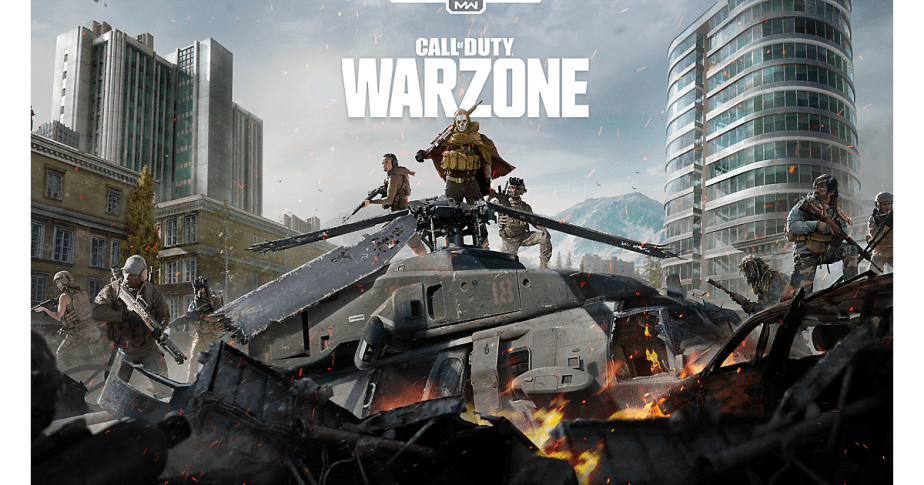
The Impact of Call of Duty

Call of Duty has been a staple of my gaming catalogue for almost as long as I can remember. I was always tuned into the Series itself but never managed to get myself a copy of a main series title until I picked up Call of Duty: Black Ops 2 for the PS3. Although, the first Call of Duty game I ever played was Call of Duty 4: Modern Warfare. My friends and I have always had a significant love for the “Zombies” mode that made it’s debut in Call of Duty: World at War.
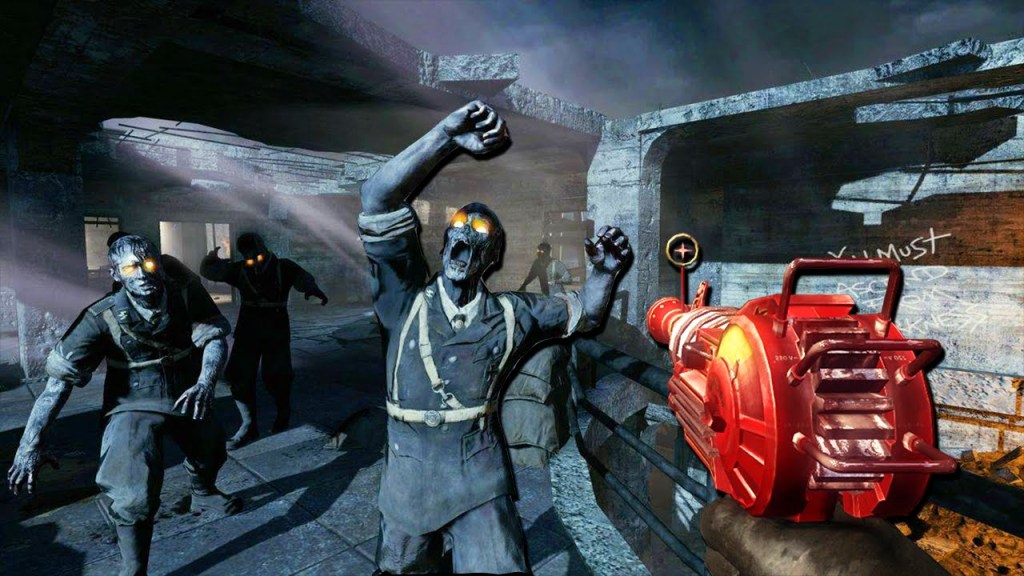
Screenshot of a remastered version of Call of Duty: World at War‘s first Zombies Map “Nacht Der Untoten”.

The first Call of Duty (COD) game was titled Call of Duty in 2003, Developed by Infinity Ward and was originally only released on PC, but was eventually re-released on XBOX 360 and PS3 as Call of Duty: Classic. This marked the modest beginnings of what would soon become one of Gaming’s most influential Titles. With the following Main Series games backing up the franchise throughout the years:

  • Call of Duty (Original)
  • Call of Duty: Finest Hour
  • Call of Duty 2
  • Call of Duty 2: Big Red One
  • Call of Duty 3
  • Call of Duty 4: Modern Warfare
  • Call of Duty: World at War
  • Call of Duty: Modern Warfare 2
  • Call of Duty: Black Ops
  • Call of Duty Modern Warfare 3
  • Call of Duty: Black Ops II
  • Call of Duty: Ghosts
  • Call of Duty: Advanced Warfare
  • Call of Duty: Black Ops III
  • Call of Duty: Infinite Warfare
  • Call of Duty: WWII
  • Call of Duty: Black Ops 4
  • Call of Duty: Modern Warfare

The Series itself is Produced by Activision and always has been a staple of their game roster. With gradual rise in Activision Stocks from the release of the original Call of Duty until the release of Call of Duty: Black Ops 4, easily the Series’ low point. This increase is easily one of the most impressive in Gaming history and truly shows the uptake in gaming that was happening in the late 2000s/early 2010s. As gaming transitioned to a less niche role in society, so did the companies that made them. At the start of 2003, Activision stocks were priced at roughly $1.68 USD, with prices sitting at roughly $80 USD at it’s peak.
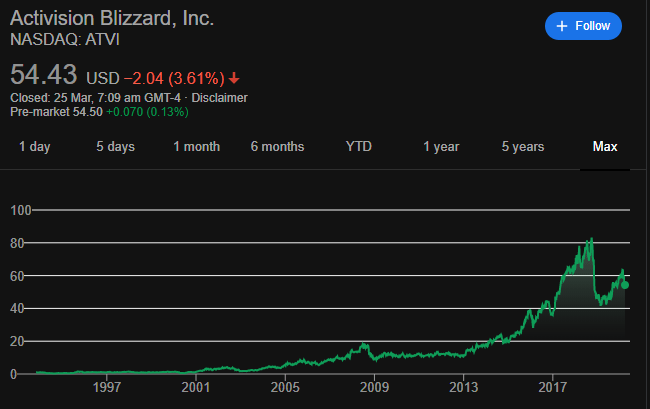
Activision Stock Graph showing the increase in Stock Price since late 2003 and drop off in late 2018.

This increase showed that gaming was a very powerful tool in the economic sector, only helping aid the regrowth that was most likely pushed forward by the release of the Playstation 2 in 2000.

As I mentioned previously, the abundance of people playing video games was slowly increasing and Call of Duty titles were one of the main attractions to newer players. The games had fantastic gunplay and great social features which allowed players to connect and interact in ways never before seen. With the parallel growth of online video services gameplay videos skyrocketed, with one of the most famous genre for Call of Duty videos (at the time) being Trickshots.

Short Trickshot Montage, example of the content that was spawned from the Call of Duty communnity.

This widespread growth of gaming culture brought about the transition of gaming coming into a more common-place entertainment method. Once again, Call of Duty was at the forefront of this growth. As a kid, I remember almost everyone I was at school with would play Call of Duty and almost nothing else. People who would normally fit a more athletic stereotype, for instance, would find themselves playing games like Call of Duty . This is just one example of the immense growth the gaming industry found.

A free-to-play add-on for Call of Duty: Modern Warfare was recently released in the form of a Battle Royale known as; Call of Duty: Warzone. It has seen moderate success and has very solid gameplay from my experience and definitely throws it’s own spin on the very successful Battle Royale Genre.

I hope this has somehow shown you the significance and impact of the Call of Duty franchise in relation to Gaming History in recent years. The rise and decline of the series is one to tell for the ages and even without it, it’s impact on society itself will be forever known.

Thanks for reading this week!
– Nathan “Naff” Hibbert
The Current World Climate and Animal Crossing: New Horizons

The world we live in is taking a turn for the weird and scary. With the constant threat of COVID-19, or Coronavirus, threatening the World’s very Social structure, almost everyone is being told to hunker down inside their homes and prepare for the long haul, I myself have had to take time away from my University Campus and attend classes at home for an unspecified amount of time due to the Virus. Most people just want to get away from all this widespread fear and panic, with whatever means available to them.

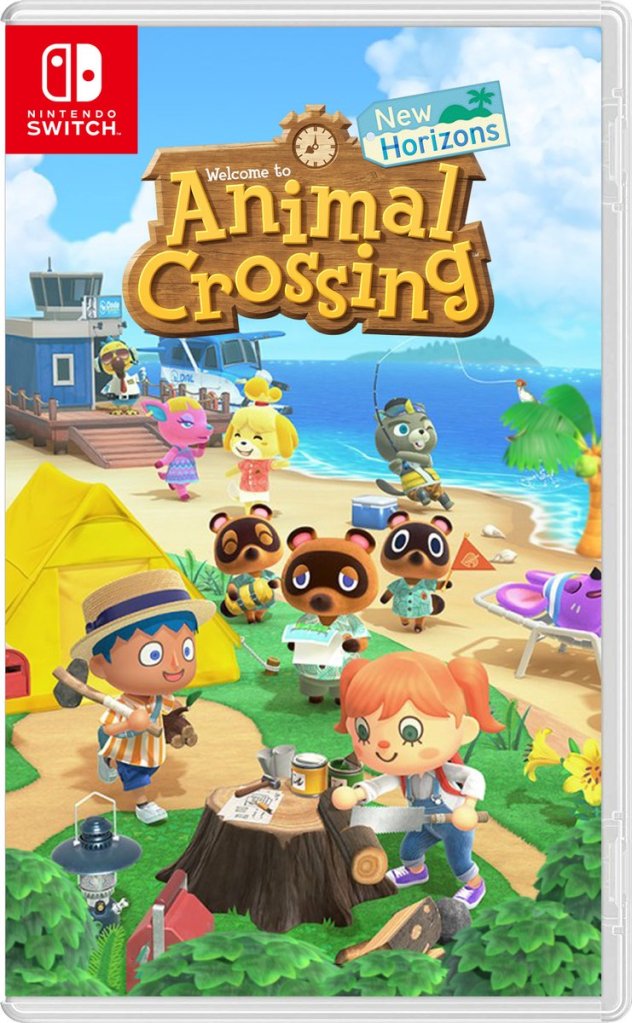
Funnily enough, a game that allows a person to leave their everyday (or not so everyday but more panic inducing) lives. Animal Crossing: New Horizons was released on the 20th of March 2020, in the height of the COVID-19 Pandemic, gifting the people who are suffering from these effects a way to escape the wave of fear that’s spreading across the Planet.

The game presents this as an opportunity from returning character and Loan Shark, Tom Nook. Tom has a package that allows a person to get away from their current life and start life a-new upon a deserted island. Building it from the ground up to a lively and community driven town.

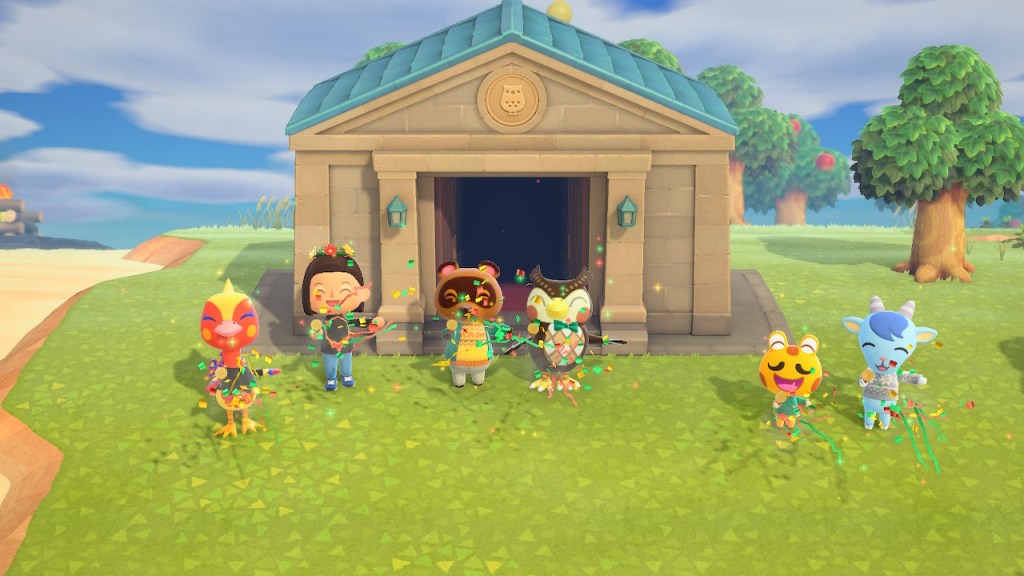
The members of my Island celebrating the opening of Blather’s New Museum

The player will find themselves doing various activities such as:

  • Fishing
  • Gardening
  • Catching Bugs
  • Chopping down trees (or not)
  • Building Houses and Property for various needs
  • Building Bridges
  • Mining Rocks
  • Flying to other deserted islands for resource gathering
  • Paying off Copious amounts of In-Game Debt (Thanks Tom Nook!)
  • And much, much more.

One more important activity that can be done in Animal Crossing: New Horizons, is that players can utilise online play to visit each other’s Islands. It allows players to check out what each other have done in their time on the Island as well as trade items and even sell items from their own island for (potentially) a higher price.

These mechanics and activities are all important to someone playing Animal Crossing: New Horizons in this day because it allows them to experience the things that they can’t do while stuck inside their houses. People can fish for exotic creatures (and not so exotic ones such as rocks) and can even catch tropical creepy crawlies, such as Scorpions and Tarantula Spiders.

The possibility that people can visit each other keeps us all connected during these trying times. Sure we have the internet and social media but there isn’t anything quite like gathering a bunch of friends to adventure across your Island of hard-ship. This is certainly something you can’t do in real life, especially with all the governmental crackdowns on gatherings.

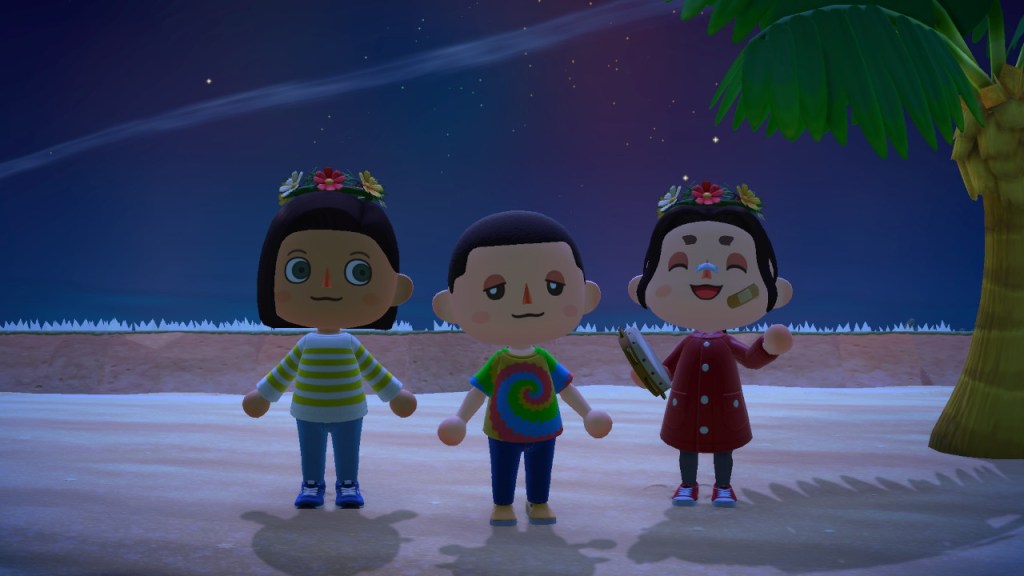
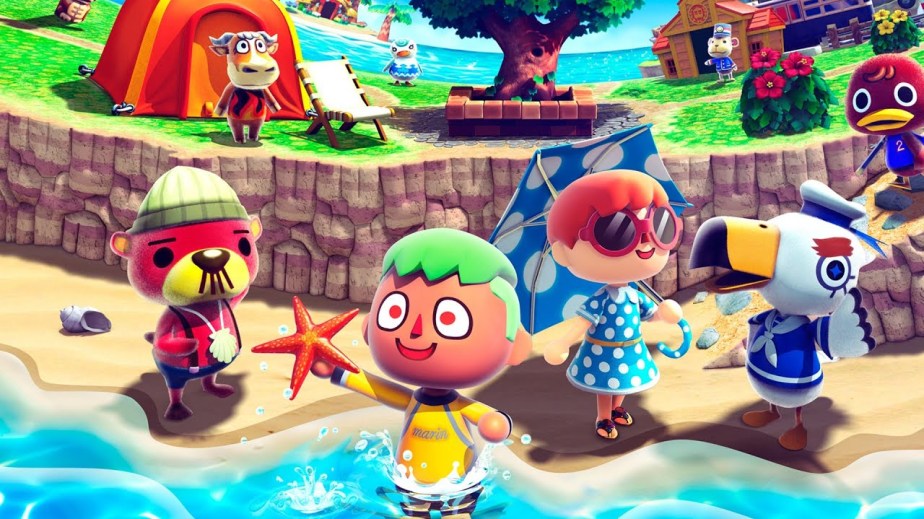
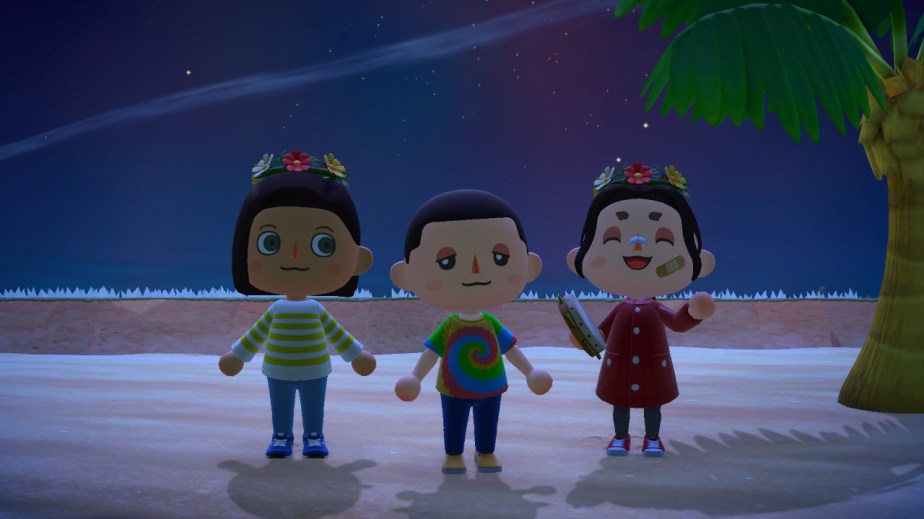
Myself and Two friends, enjoying our time at the Beach on my Island.

In this trying time, Animal Crossing has become our saving grace. Allowing us all to stay connected and somewhat productive in these trying times.

Thanks for reading!
– Nathan “Naff” Hibbert

Subjectivity in Games Criticism and Why we need it

I’m sure we all look to Game reviews or criticisms when we’re thinking about picking up a new game, be that through official avenues such as Kotaku or IGN, or places like Steam User Reviews. Heck even asking someone at your local Games store. We all do it from time to time. I personally see these articles as Subjective rather than Objective, as a review/criticism is something that is suppose to tell others about an experience with a game itself as a whole. Criticism, on the other hand, is usually VERY Objective. This is because criticism is largely thought to not take into account a person’s experience with a game and only what the game has to offer should matter.

I disagree with that and I will tell you why.

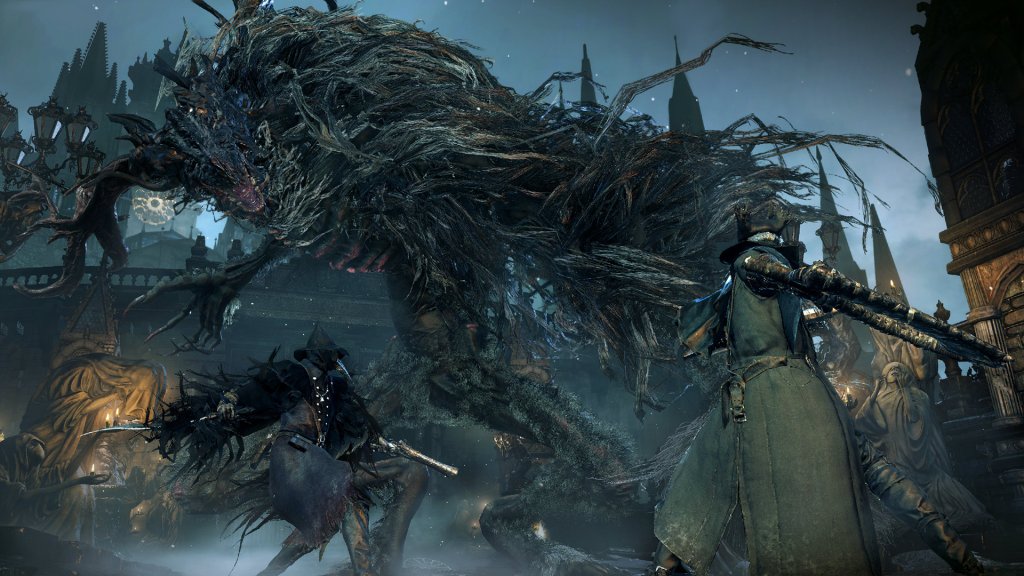
The Player Character (Right) fighting the Game’s first boss, Cleric Beast with an NPC Summon Eileen The Crow (Left)

Firstly we must talk about the most important thing that comes to gaming, or any media in general really, the player’s experience. The experiences that the player both brings to the game and those that the player has while inside the game.

Each person’s experience will wildly differ therefore each person’s experience will be different. This leads to reviews/criticism being severely individualized, which in my point of view is a good thing. Subjective reviews/criticism allow for players to understand a person’s mindset and their own comprehension of a game. Although this does mean that a certain article mightn’t conform to any given person, but this allows that the sheer abundance of reviews/criticisms that exist in this day and age will surely cater to someone’s viewpoint.

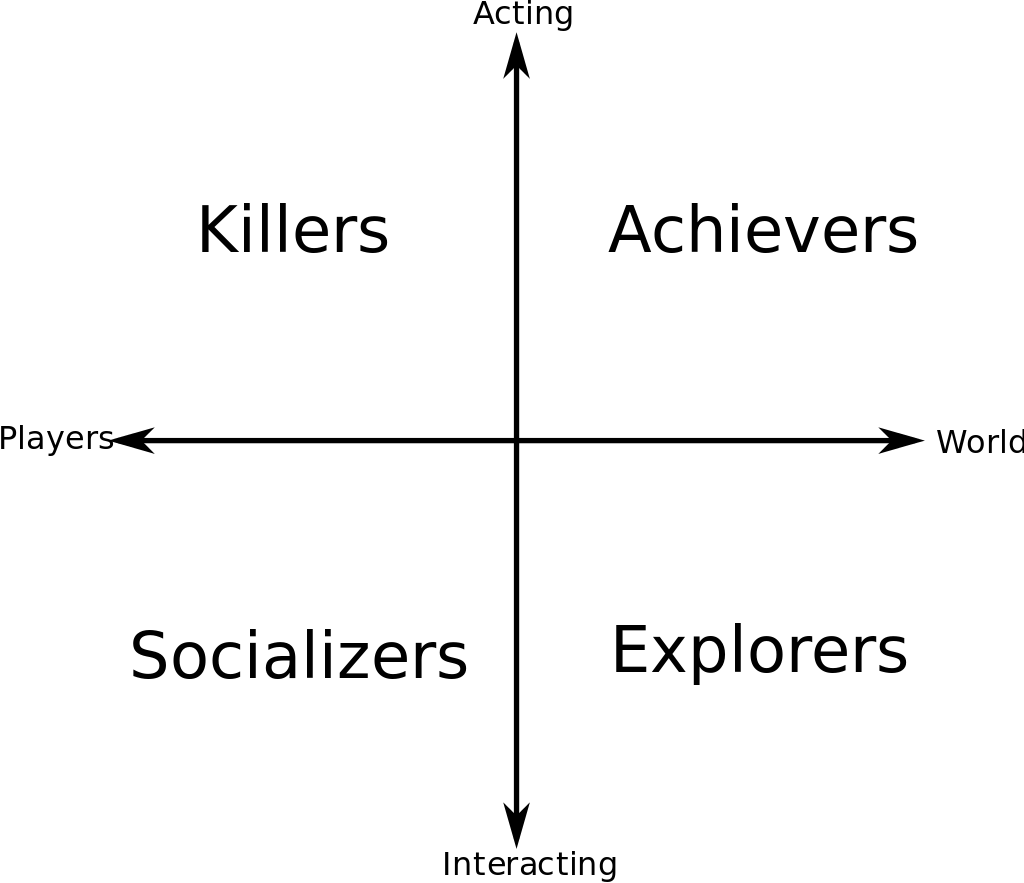
Going into more what subjectivity is, people have different life experiences and mindsets that affect their play experience and style. Any given person can fit into one or more of the following psychological categories:

  • Killers
  • Achievers
  • Explorers
  • Socializers 

Killers are people who play games that look to cause mayhem and havoc among a given game. They’ll go through a server destroying their opponents through either legitimate or illegitimate means.

Achievers are the people that look to do everything and everything in a game. This goes from completing the achievements for the game, finishing all the side-quests or even just completing self-imposed challenges. They seek a challenge of any sort.

Explorers will go far and wide to see everything a game has to offer. See every nook and cranny of a game world, see every line of dialogue an NPC has to say, even understanding the finer details of the game’s mechanics themselves.

Socializers are the extroverts of gaming so to speak. They go into a game and look to communicate and make relationships with other players in the game more so than playing the game itself. This can be through in-game methods (e.g. Guilds or Friend lists) or fan communities (e.g. Subreddits or Facebook groups).

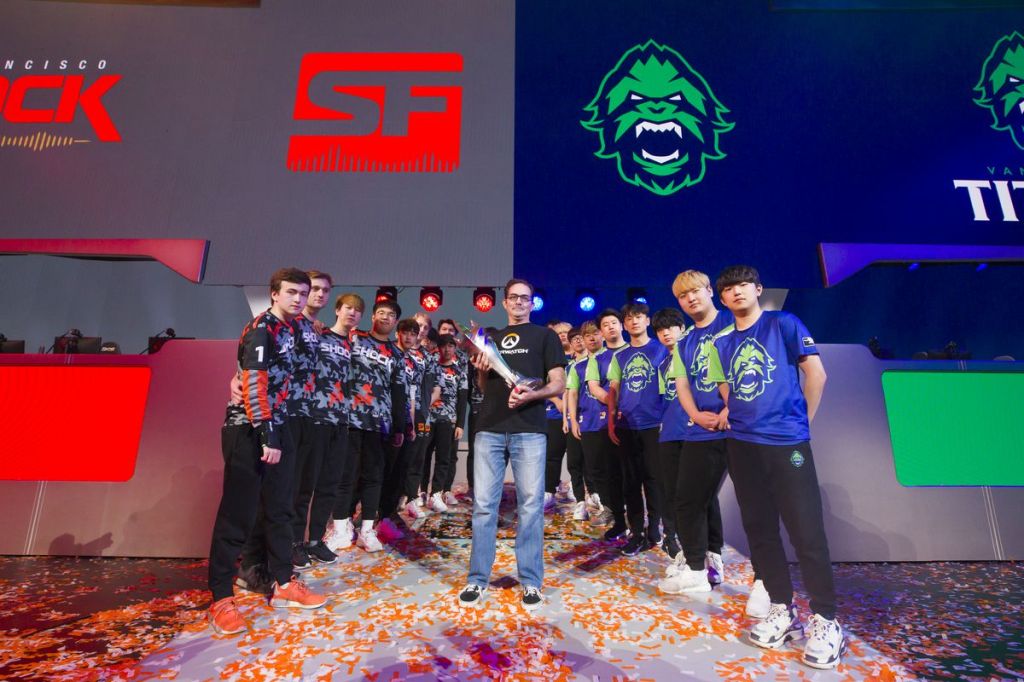
Image from the 2019 Overwatch League Finals between the San Francisco Shock and the Vancouver Titans. These players are an example of both Killers and Achievers.

The type of player alone will contribute to a given review/criticism if subjectivity is involved. A review/criticism from a player who is more of a killer while playing a game, is not necessarily going to engage a player that is more of an explorer.

But this is exactly why Subjectivity is needed in games. A person’s experience with a game is directly influenced by their play-style. This is important to a review/criticism as a person can really get a feel for what a game is.

With Objective reviews/criticism, the game is broken down to simply narrative, gameplay and visuals for the most part. This gives the reader a sense for what the game looks like and plays like to an extent. But NOT to the extent a Subjective review/criticism would do.

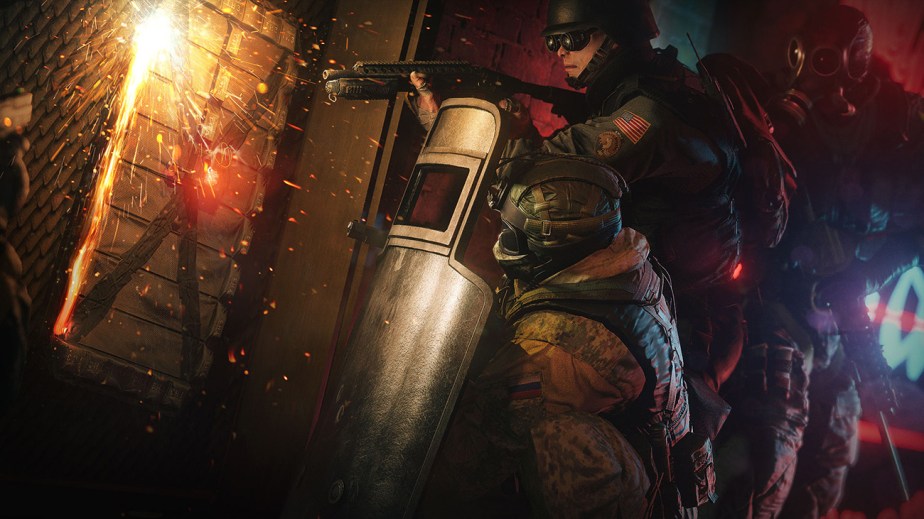
Take Rainbow Six: Siege for example, I have played an immense amount since early 2017, just before the release of it’s Velvet Shell expansion. I currently have around 850 hours played on Steam and love it to death, sure I have my gripes with it but it is truly a fantastic game.

However, if I were to give a review on it Objectively I couldn’t truly show what the game feels like to play. I would mention that the gun play and mechanics are spectacular, the feel of almost every gun is great and the ability to out skill an opponent (or out luck an opponent) and kill them with a ‘one-shot headshot’ is super satisfying each and every time. The breaching and rappelling mechanics were new to me and definitely took some getting used to but I love the uniqueness of it and the amount of versatility added to the game utilizing these mechanics.

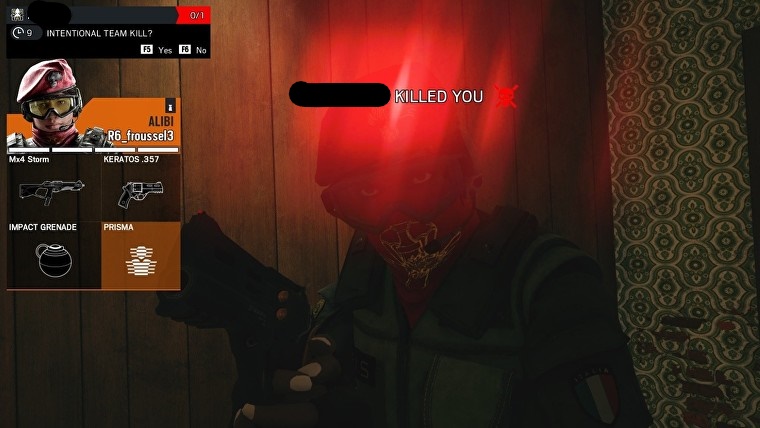
If I were to give a Subjective review though, I would mention that dominating people is the single most satisfying bit in the game. Somehow clutching a 1-5 is a moment of pure hype and excitement among the whole team (be these people you know or not). But the game’s players can lean into the Killer category a lot. You see, R6: Siege has a friendly-fire mechanic, this means that teammates can damage each other. This leads to a lot of toxicity if a person gets annoyed with another. Over the time I’ve played I couldn’t count the amount of times I’ve been team-killed for seemingly no reason on both my hands and feet. It certainly ruins the experience sometimes.

A Team killing scenario with a box asking if it was intentional. If the player reports it as intentional the killer receives a penalty.

That is the difference between the two types of reviews/criticism. albeit to a smaller extent. Someone could read my Subjective review and be enticed to play the game more so than they otherwise would be, the possibility to just murder teammates that are annoying definitely talks to some people. In that same vein, it might very well turn some people off the game entirely.

This is why Subjective reviews/criticism are needed. They give a reader a more comprehensive feel for what the game is like to play and therefore can make a more informed decision .

Another reason we need Subjectivity in game’s reviews/criticism is because it gives a voice to the people that need it. In an Objective look at a game it doesn’t matter who you are, you are just a piece of meat tapping keys and talking about a game. Whereas a Subjective look brings your personality into account and really brings forward who YOU are. To relate to another post of mine (Diversity of LGBTQIA+ Characters in Video Games), I for one would love to point out the sexual orientation of the characters I encountered on my journey throughout a game. This mightn’t matter to some people but it does to me and a lot of other people.

All in all, I believe we need Subjectivity because it shows the game for what it truly is. An experience for the player. The player plays the game for the experience, be that as a Killer, Achiever, Explorer, Socializer or a mixture of the lot.

The player’s experience is moulded by their entire being, who they are, what they find important and how they play. Subjective criticism and reviews show this in a brighter light than an Objective view could ever.

Thanks again for reading!
– Nathan “Naff” Hibbert

Nathan “Naff” Hibbert

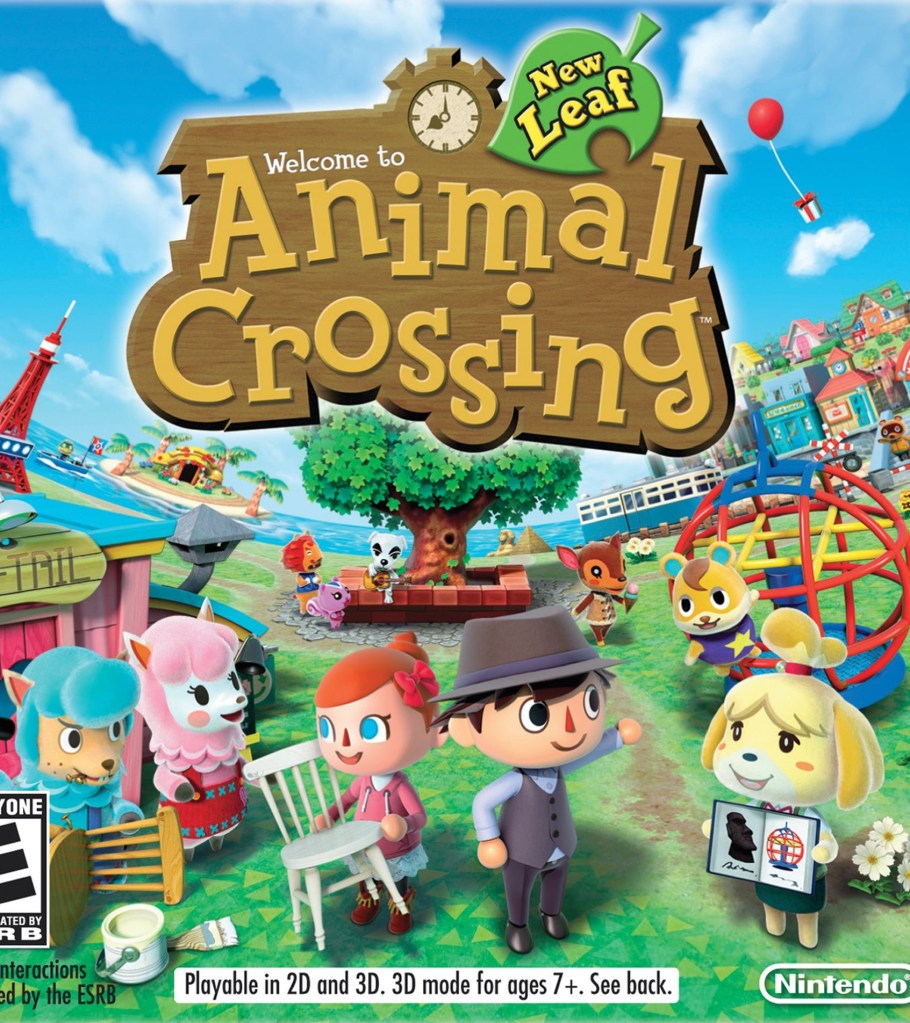
Was Animal Crossing: New Leaf a Mistake? A Response

Hello again! For this week’s first post I will be taking a look at a fellow blogger and colleague Mahalah or MoshiBoi (here’s a link to their Blog) and their response to an article titled “Revisiting Animal Crossing: New Leaf was a Mistake” by Kotaku writer ‘Narelle Ho Sang‘ , the original article can be found here.

I myself have never played an Animal Crossing game (a sin I know) but I have played a similar title in Stardew Valley and I am certainly looking forward to Animal Crossing: New Horizons‘ release in the coming weeks. I mention this as I need to state that I am not familiar with the game itself an it’s intricacies.

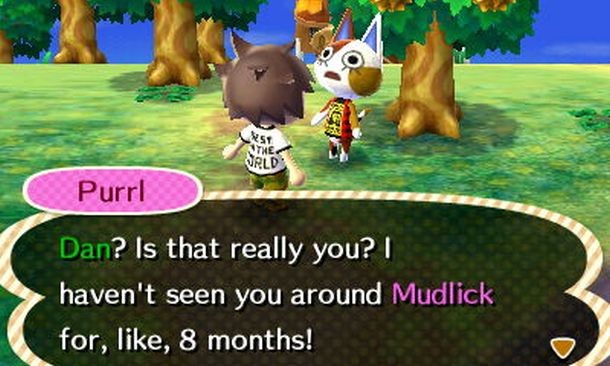
During my read of the MoshiBoi’s blog post, the title of the original article was quoted being about why Animal Crossing: New Leaf was a mistake. So my opinion on reading the blog was shaped by this misunderstanding and so I myself felt the article was a waste of time. I felt like the article more heavily talked about the problems with why returning to the game was a hard time due to NPC interactions heavily berating the player for leaving their beloved town.

After reading the original article for myself however, I now see that it is a talk about the problems with revisiting the game itself after putting it down for a long period of time. As Narelle stated “The hours and calendar days pass in real-time. The seasons change…”, the whole time they weren’t playing the Town continued to grow and NPCs grew tired of missing the player, who is the Mayor in this game.

Animal Crossing: New Leaf NPC – Purrl stating how long the player has put the game down

Going back to Moshiboi’s post, they go on to mention that the writer was immersed and clearly had fun while playing the game originally. While some of their planning and decorative decisions might be hard to look at, they at the time still enjoyed the game and did what they wanted to.

Both Blog and Article mention NPCs putting the player down for not playing the game for a while, Narelle stating “Each (NPC) laying on the guilt with emotional surgical preciseness—cutting me deep.” This goes to show the player’s attachment to these characters and the town they had made. This is the reason the NPCs talk in this way, to make the player feel bad and to get them to come back for a bit longer. Moshiboi, however, paints this as a severe and inappropriate “Guilt Trip” stating “I think getting guilt tripped by an NPC for not playing the game in a while is a bit much”. This is a fair statement as honestly these NPCs don’t know about the player’s attachment to the game or do they know about real-life events that might prevent play.

Moshiboi goes to say that since the game is mostly targeted at Children that a child hearing these statements from NPCs would make them want to come back even more so. This is because of the blurred line between Reality and Fiction that children are unable to discern.

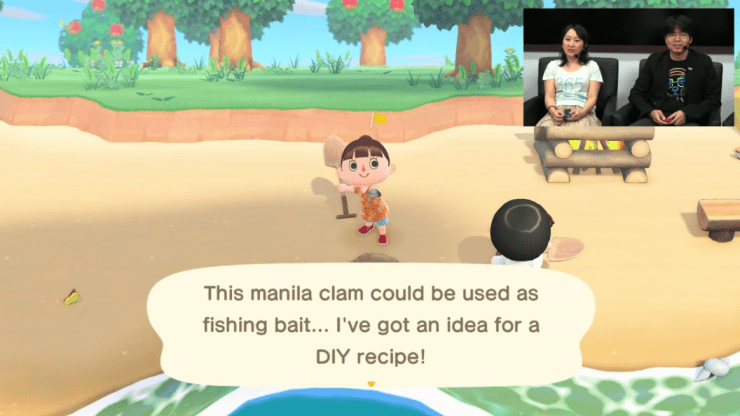
Screenshot of gameplay of Animal Crossing: New Horizons from the E3 2019 Nintendo Treehouse

My take away from both the Article and Blog is that you can look back at your past self’s decisions and either love it or hate it, but you can’t neglect the fact that people change. As both authors stated, they have spent hours upon hours making their town into their own vision. Placing things where they want and doing what they want at any given time, this lends itself to the notion that while immersed in such a free game they enter the ‘Magic Circle’. This term refers to the zone a player can fall into when deeply immersed in a game’s world. It seems both of these players did at one point or another. Simply put, originally, the players loved what they were doing.

Another thing is that people’s style and tastes change over time. What was appealing to you 5 years ago might not necessarily appeal to you now. As someone who played soccer for 16 years of his life I can tell you that now having not played for 2 years now I have little to no interest in the sport. People Change.

People change but they had fun originally!

That’s it for this post, again you can find the original article and Moshiboi’s response here:

“Revisiting Animal Crossing: New Leaf was a mistake” by Natelle Ho Sang – Kotaku

“Week 3: Response to why New Leaf was a mistake” by Mahalah/Moshiboi

I myself will be back later this week to talk about Subjectivity in gaming, I hope to push out an interesting read.

Thanks for reading!
– Nathan “Naff” Hibbert