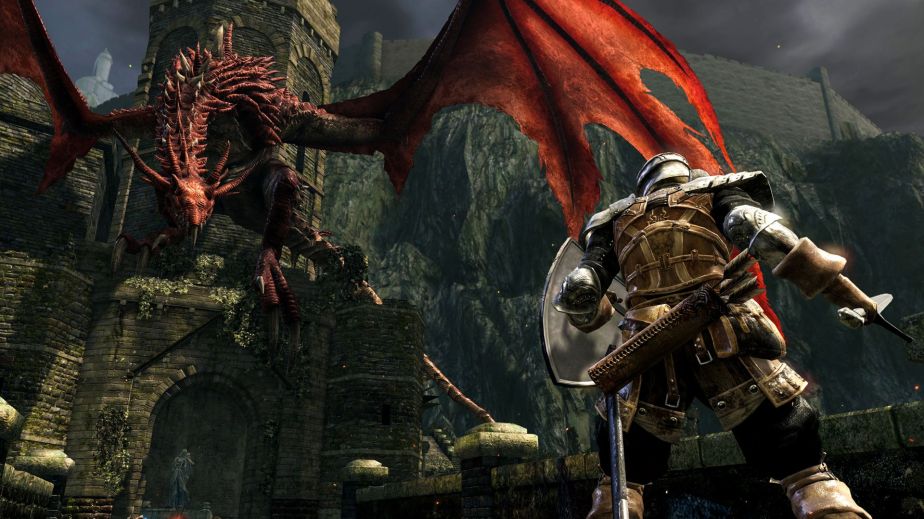
In today’s post I will be taking a look at the story of my favourite game of all time, Dark Souls. This game is often highlighted for it’s phenomenal gameplay mechanics, but what often goes unnoticed is it’s also phenomenal story. But first, I will touch on these gameplay mechanics:
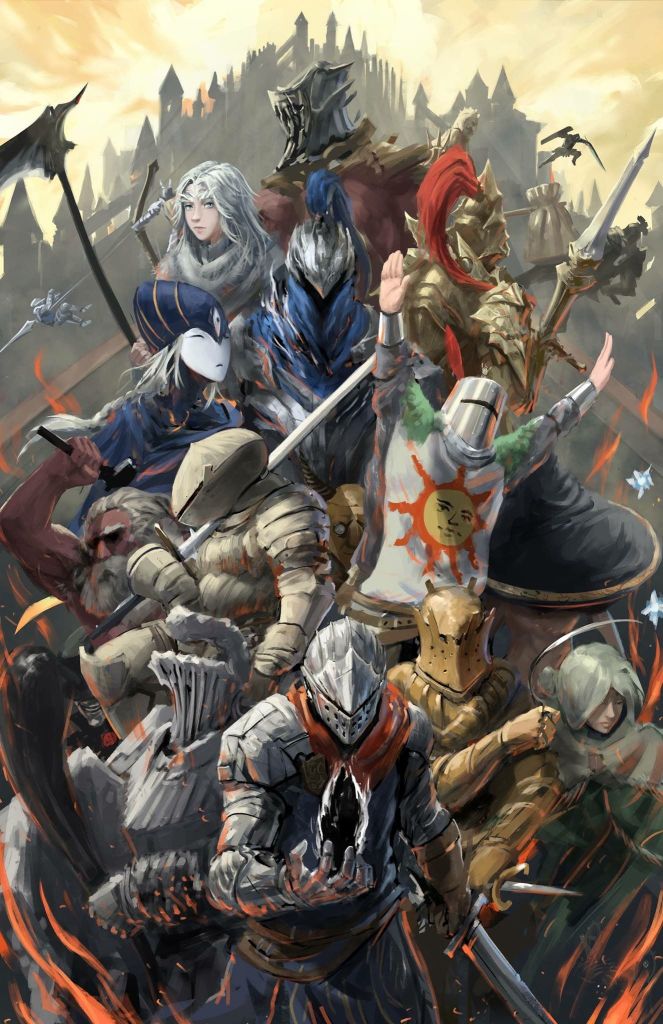
An Illustration of Dark Souls characters by Nolan on Etsy 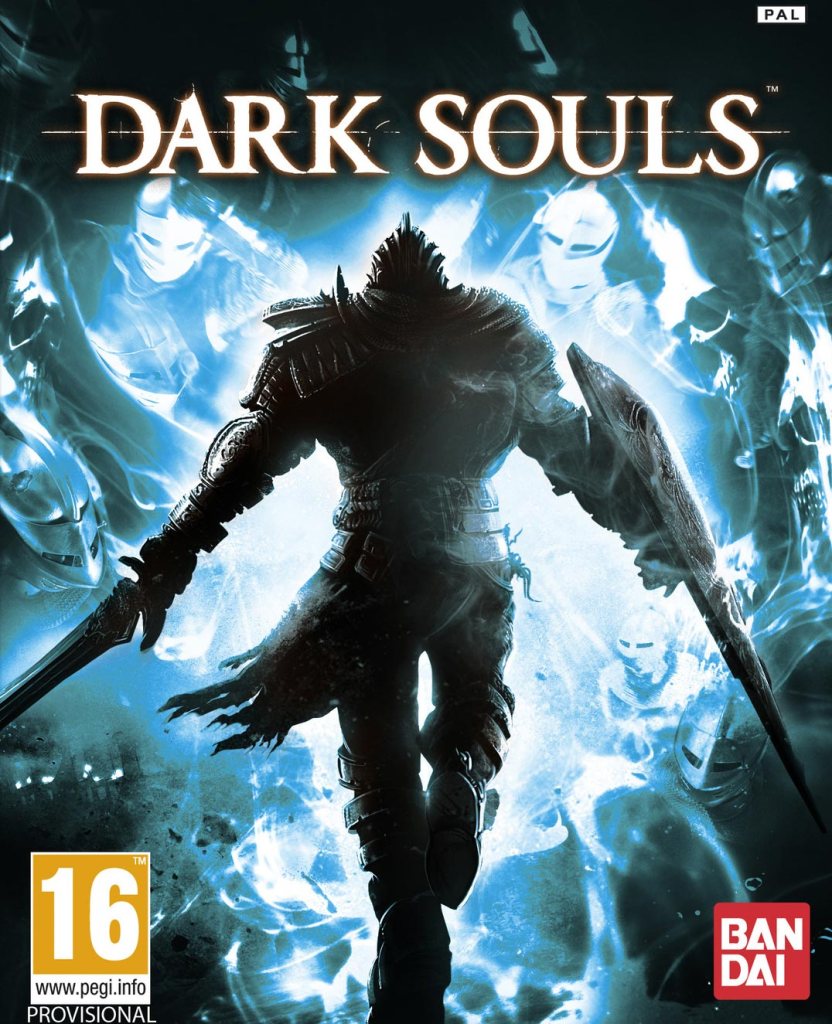
The Original Dark Souls Cover Art
What does the Player do?
During the duration of Dark Souls the player ventures through a dark and dense Medieval landscape known as Lordran, collecting treasures and slaying both humanoid and monstrous enemies. They do this using a variety of tactics, from one-handed and two-handed weapons (such as Straight Swords and Great Hammers), to powerful magic (such as Sorcery and Pyromancy) that either do direct damage to an enemy or buffs (or sometimes hurts) the player, and even utilising shields to block damage altogether.
Of course, while fighting these ferocious enemies the player must do so while taking minimal damage. If an attack is unblockable or not worth blocking with a shield another mechanic is usable. This introduces us to the roll mechanic. By pressing the appropriate button the player will cause their character to roll, this can be used to avoid attacks due to the animation of the roll having what is called “i-frames” or invincibility frames. This allows the player to avoid damage and move into more advantageous positions, either for getting a critical backstab for massive damage or moving into more advantageous position.
While dodging damage might seem easy after that description, it really isn’t takes damage and must restore it by either using an Estus Flask, which is an item collected by the player at the very start of the game BUT has finite uses, or by resting at any of the far and few between Bonfires. Using an Estus Flask will put the player at risk of being hurt further if not timed correctly. Bonfires however allow the player to heal and level up, as well as store any excess items they’re holding and even repair weapons and armour. It does come with a massive downside though, it brings back any enemy the player may have killed already. This does have a limit though, it will NOT bring back Unique or Boss enemies. Players will also respawn at their last used Bonfire before death.
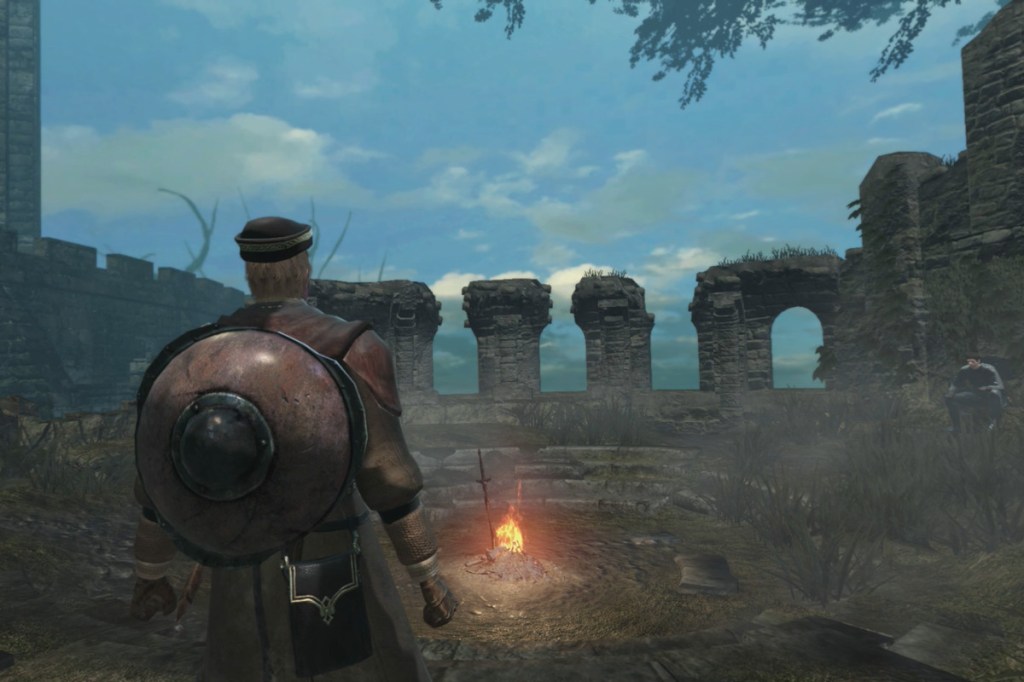
The Safety of Firelink Shrine, Dark Soul’s main hub 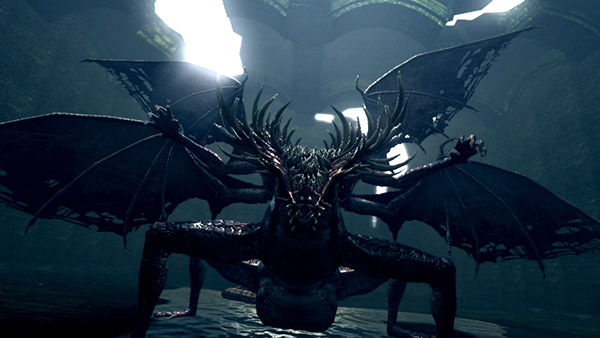
One of the more horrific bosses in Dark Souls, Gaping Dragon
Can these Actions be presented as a Story?
The actions of the player can certainly be presented as a story, any boss the player may encounter has a reason to it, the player is driven to press on and finds it necessary to defeat any given enemy. The tale of their fight is almost always a legendary one, from finally defeating the tough boss through trial and error to somehow defeating a boss most find “hard” on their first try. Everyone has a story to tell of their first time in Dark Souls.
A Timeline of Dark Soul’s Events
The game itself does have a very loose narrative, not told by conventional means. I will here list a timeline of events and since a lot of the game can be taken in any order I will list my personal experience.
- The Player Character is shown locked away in an Undead Asylum, left to Hollow and Rot. Until a key to their cell is dropped in by an NPC known as Oscar of Astora.
- The Player is then tasked with escaping the Asylum and after finding their first Bonfire and receiving the Estus Flask from Oscar, who is now on Death’s Door. find themselves standing in front of the first boss. The Asylum Demon.
- After defeating the Asylum Demon they are whisked away by a large Black Crow and taken to the game’s hub, Firelink Shrine
- By interacting with an NPC in the area known as “Crestfallen Warrior”, the player finds that there is something called “The Chosen Undead” and this Undead must ring the “Bell of Awakening” located above Firelink Shrine to eventually Link the First Flame and gain the prevail of the Gods.
- The Player then heads upwards, away from the safety of Firelink Shrine towards the Undead Burg, a town and heads towards the first bell.
- After defeating the Bell’s Guardians, The Bell Gargoyles, the player interacts with the Bell and rings their first bell. Interestingly enough players in other game can hear the bell ringing when another player does so.
- Upon heading back to Firelink Shrine the player will find a large snake-like creature jutting out of the ground. This is a new NPC known as “Kingseeker Frampt”. Frampt goes on to tell you that there is not 1, but 2 “Bell of Awakening” and that he will assist you in any way he can.
- The player is then tasked with going deep below the Undead Burg and even Firelink to a place called Blighttown. They reach this by beating 2 bosses, these being The Capra Demon and The Gaping Dragon.
- In Blighttown they find the Second Bell, protecting by a half Spider, half Woman monstrosity called “Queelag”. After her defeat the Player safely rings the second “Bell of Awakening”
- While speaking with Frampt the player finds that they must ascend to the city of the Gods called “Anor Londo” where they will meet Gwynevere, Princess of Sunlight.
- After ascending “Sen’s Fortress”, a death trap of moving obstacles and Giants, and defeating the boss defending the path to “Anor Londo” called “The Iron Giant”, the player is lifted up into the sunlight filled city of “Anor Londo”
- Upon arriving, the player meets a new character called the “Darkmoon Knightess” who describes the horrendous pair defending Gwynevere, “Ornstein and Smough”.
- After traversing over precarious walkways and castle architecture, the player finally confronts “Ornstein and Smough”.
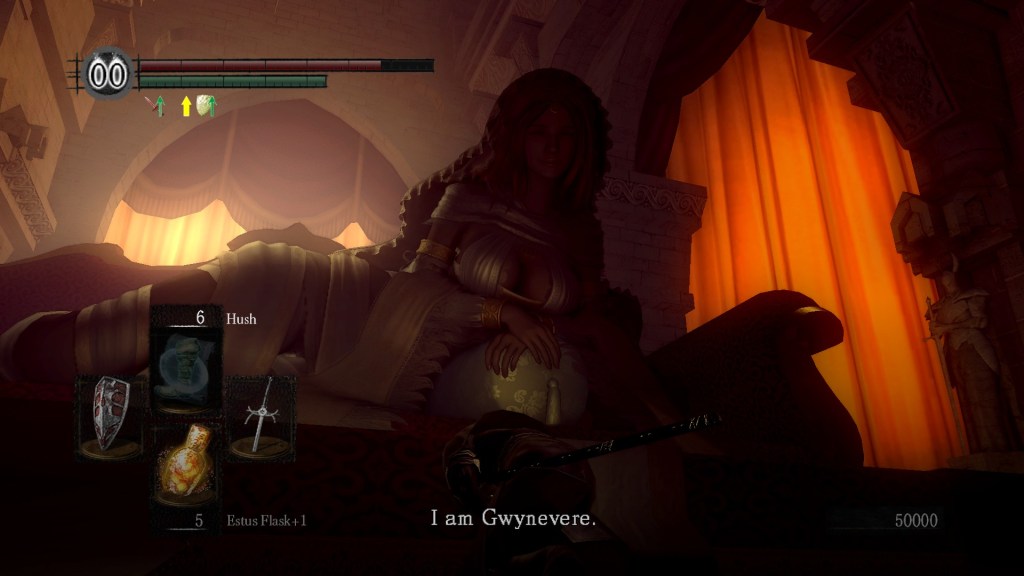
- A tough victory is awarded to the player and they meet Gwynevere, who tells them that they must find the 4 Lord Souls to appease the First Flame. These Lord Souls take form of part of the Sun God Gwyn’s Soul that he bestowed upon people of importance during his reign. The player is also gifted the Lordvessel, an item to hold the Lord Souls and open the way to link the fire. This must be placed at Firelink Altar, deep below Firelink Shrine to open the way to the Lord Soul(s).
- The player then forges ahead into the Grand Archives to defeat “Seath the Scaleless” and collect the first Lord Soul, after they promptly die to an invincible “Seath” in their first encounter, and push on into the Crystal Caves to face “Seath” properly.
- After the player then takes on “Gravelord Nito” to collect their second Lord Soul, after descending even further than Blighttown below Firelink Shrine to the Catacombs to defeat “Pinwheel” and then onto Tomb of Giants where they will find “Nito”
- Thirdly, the player must take on the “Bed of Chaos” deep within the ruins of Izalith, hidden even further down than the Tomb of Giants. After defeating “Firesage Demon” and “Demon Centipede” they are finally able to face the dreaded “Bed of Chaos”
- Fourth, and finally, the player must face the “Four Kings”, to do this they must venture into the sunken city of New Londo. After draining it they find a path deep into a place called The Abyss, where the player cannot survive. They must find a ring that allows them to walk in the Abyss. They find this ring guarded by a large sword wielding boss called “Sif”, after this fact they can defeat the “Four Kings” and collect their final piece of the Lord Soul
- Finally the player will venture down to Firelink Altar to place the Lord Souls in the Lordvessel and head into the Kiln of the First Flame.
- The player finds the game’s final boss, “Gwyn, Lord of Cinder” deep inside the kiln and proceeds to fight him.
- After his defeat the player can interact with the central Bonfire to Link the First Flame and finish Dark Souls.
Which are the most significant events in the story?
Now, I will specify that these dot points were from my first play-through of Dark Souls and is specifically vague as that is how the game shows it. The significant events through this story are certainly the ringing of the “Bells of Awakening”, ascending to “Anor Londo”, defeating and collecting the four Lord Souls, and finally defeating Gwyn and linking the first flame (or letting it fade for that matter). For each of these significant events I will now list what the player does to cause them, whether the player does it themselves or is it presented non-interactively.
To ring the “Bells of Awakening” the player must traverse through the game’s worlds and reach the physical locations themselves and then defeat the Boss guarding it. The player themselves does indeed ring the bell themselves by walking up to the bell and interacting with it. If the game had just rung it automatically for defeating the boss it would not be quite as impactful as it takes the player out of the immersion of having just beaten such a powerful enemy to reach this feat.
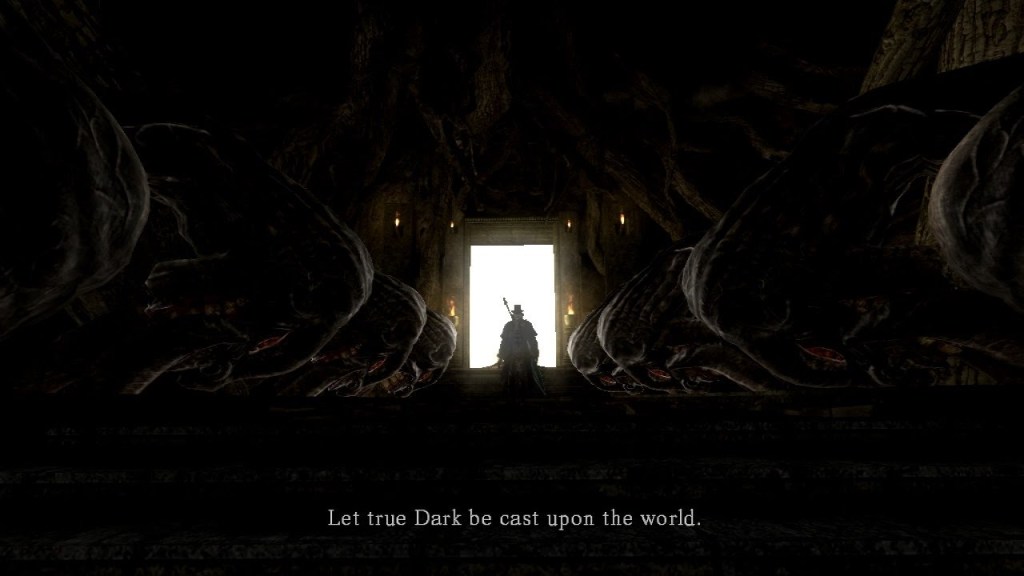
To ascend to “Anor Londo”, once again the player must traverse through an area, a very dangerous one at that, and eventually defeat a boss to be pulled up to the city. The player themselves doesn’t really do this themselves as they interact with a literal ring on the ground which causes a cutscene to play. In this cutscene the player character is shown being pulled up and over a large wall by flying demons. This doesn’t deny the brilliance of ascending the the City of the God’s for the first time though, it truly is a glorious sight.
Collecting the Lord Souls is very much like the last two points, but on a much more grand scale. Beating bosses and harvesting their souls to advance is very much a non-interactive event, each Lord Soul is presented directly to the player as a reward for defeating the 4 Bosses possessing the Lord Souls.
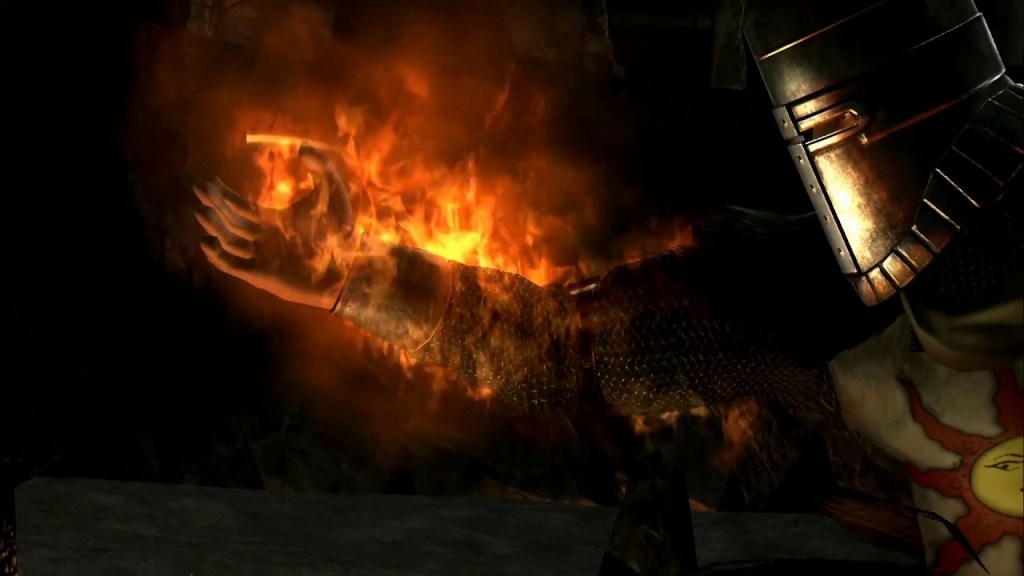
Finally, defeating Gwyn, Lord of Cinder and linking the first flame is much like the past 3 events. After defeating Gwyn the player can interact with the First Flame OR walk out of the arena. Interacting with the First Flame will show a cutscene of the player doing so. This is very much an interactive experience as the player can decide the outcome of the game itself.
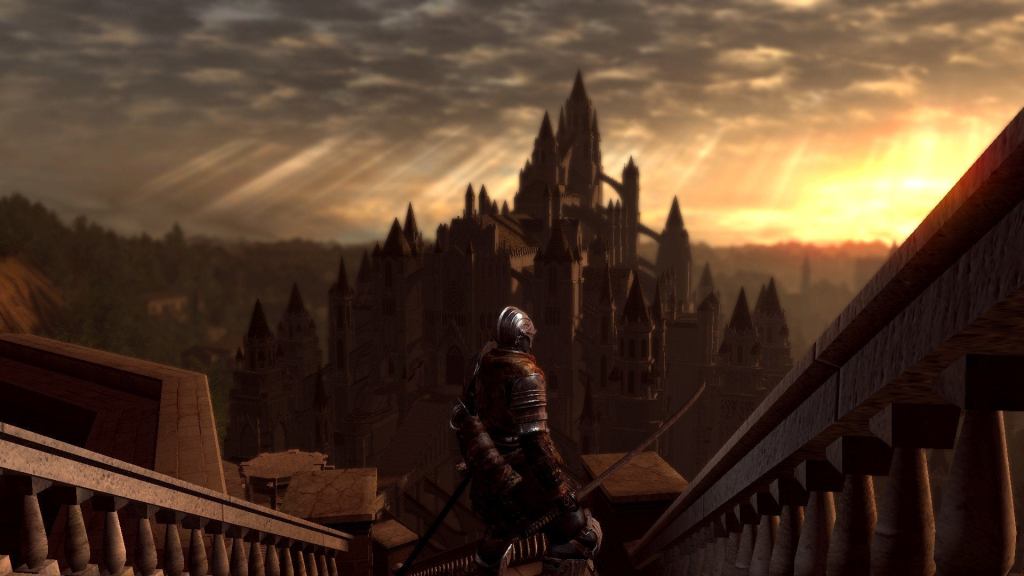
Anor Londo, City of the Gods, as the player sees it upon their first arrival. 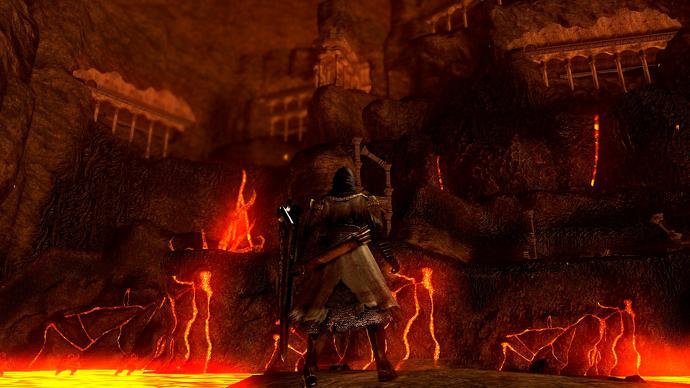
The Player looking up at the landscape of the Demon Ruins from the Lava filled base.
What is the Player’s Role in the Story?
Our timeline shows that the story of Dark Souls itself is quite literally centred around the player character, “The Chosen Undead”. Each event, major or minor, in the game’s story is influenced by the character. The game itself sees these events as nothing but hurdles, a means to an end, challenges that the player must overcome to see the end. The story itself is very vague and most of the exposition takes place through world building and back-stories shown through item descriptions. The game itself gives the player next to no rhyme or reason to any of this.
The player takes direct control of these events, regardless of if they know why they are there or not. Regardless of that they will ALWAYS have a story to tell after the fact. Meaning that the story itself is mostly about the player’s experience with the game Each decision, or lack there of, influences the story that a player will tell. Different story endings require different things to be completed during the game and so each play-through will have different endings, major points and experiences via the player alone.
Is this a STORY-DRIVEN game, or a game that HAS A STORY?
Dark Souls tells the story of a dark and bleak world, where all looks lost to humanity. The world is sinking into chaos, in some parts literally, and nobody knows what to do.
Throughout the game the player will tackle these areas, bosses and characters without not really knowing why. The draw of Dark Souls is that it is deep in terms of character Builds and challenging in combat.
That being said, Dark Souls is most certainly a game that has a story. The focus is the gameplay elements, and while the story and lore is phenomenal, it is NOT the focal point of the experience.
The game is top tier without knowing the details of any given event. Knowing these details however gives the player a deeper appreciation for the characters and areas they encounter. I could give a multitude of examples but I won’t. I’ll leave them for you to find if you’re interested.
On that note, the Youtube Channel VaatiVidya, is a fantastic source of lore and story explanations for Dark Souls (as well as other FromSoftware titles e.g. Bloodborne and Sekiro). Below is a video from his ‘Prepare to Cry’ series, which focuses on the tragic back-stories of the game’s beloved bosses and NPCs. This one in particular is about the infamous, Artorias the Abysswalker.
That’s it for this post, there will be another this week, tackling the topic of Ludonarrative Dissonance (the concept of story and gameplay matching) in Video Games.
Thanks again for reading!
– Nathan “Naff” Hibbert

 Naff's Gaming Blog